









Off-Grid Deals and Tips
Stay Charged
Be first to hear about new products, seasonal deals, and off-grid power tips.
MPPT & PWM Charge Controllers
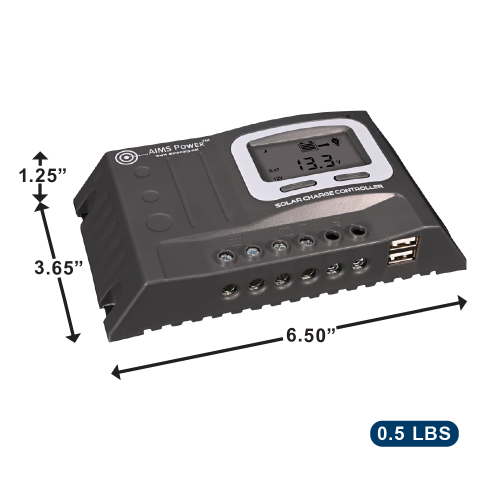
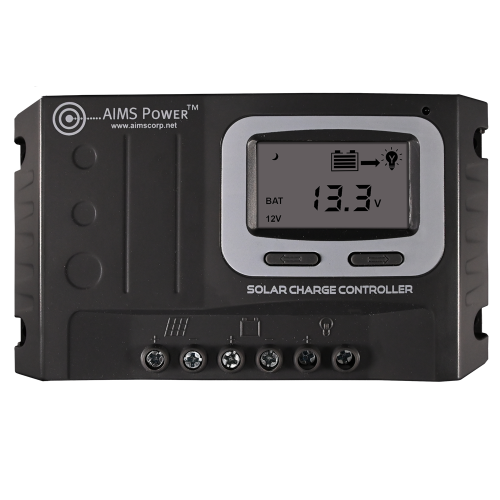
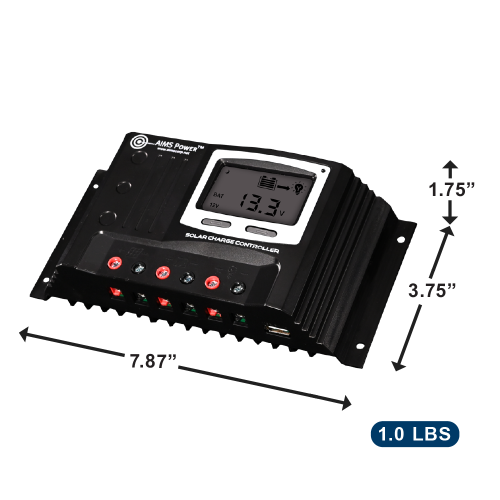
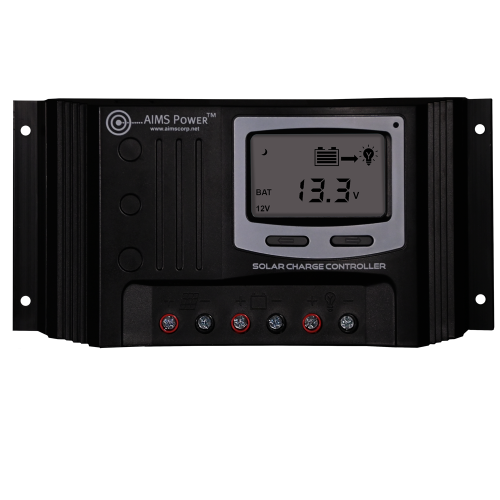
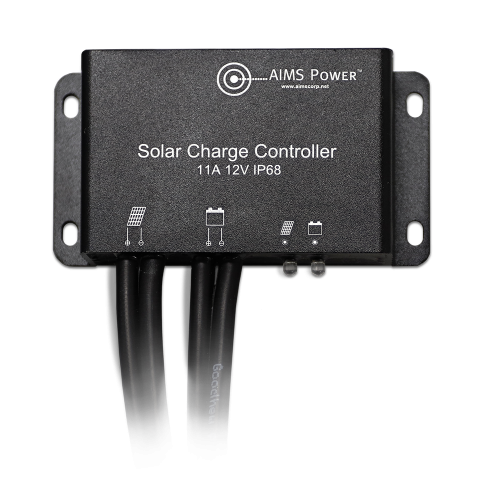
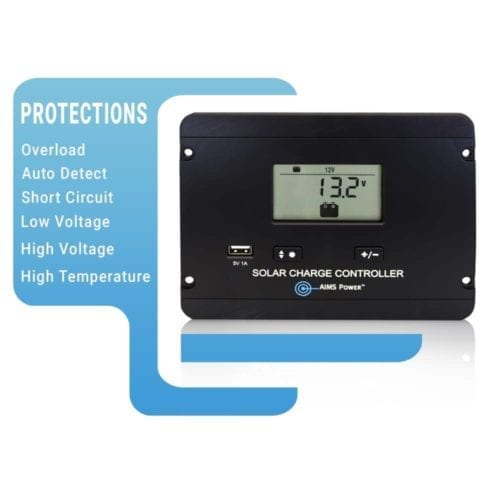
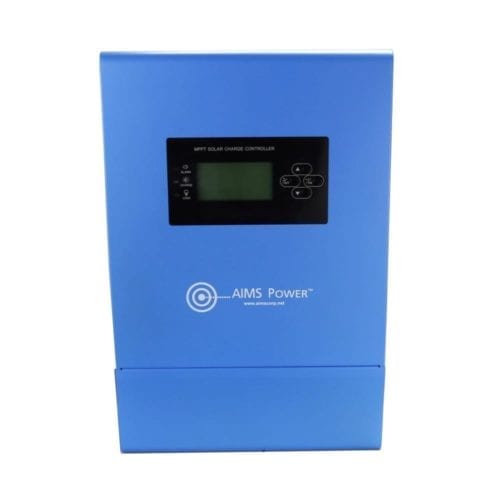
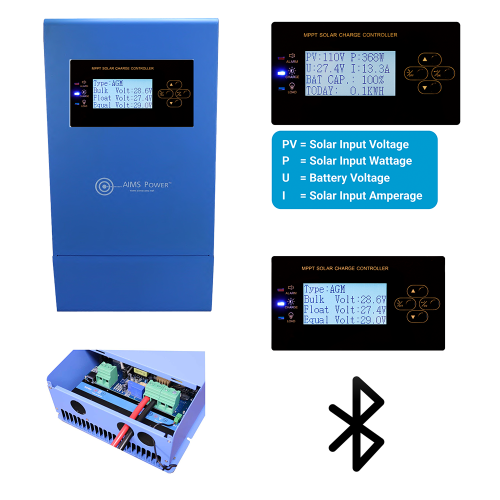
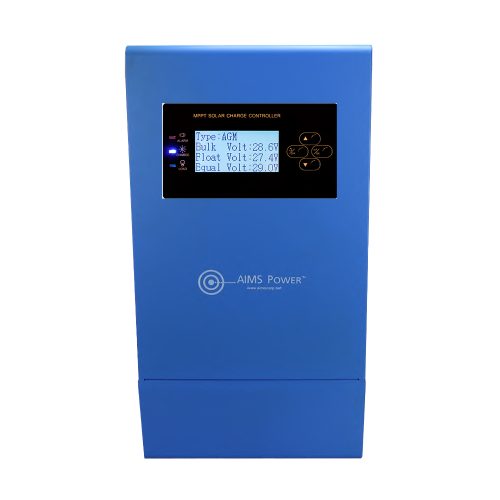
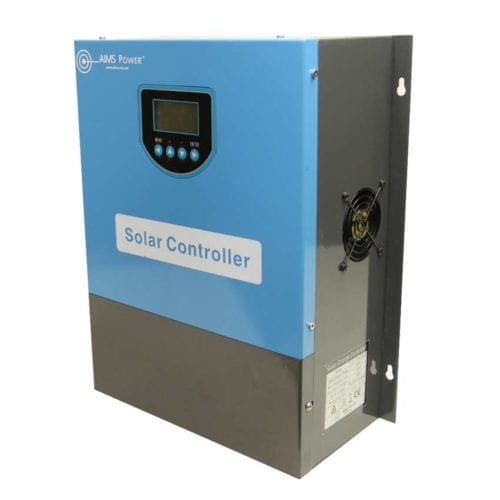
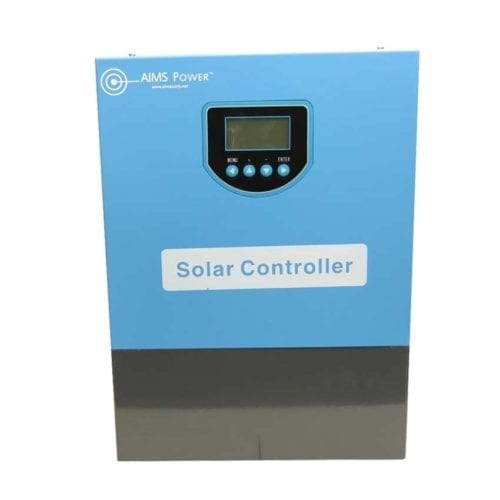
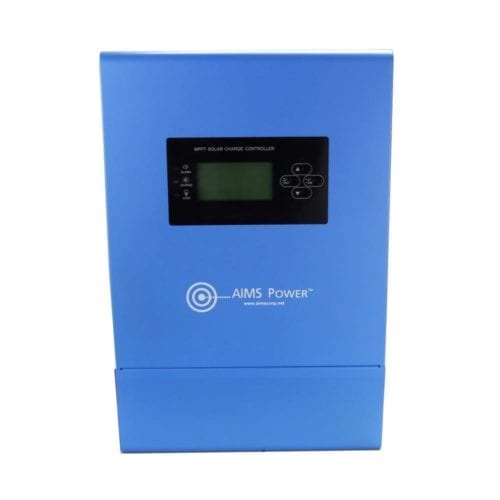
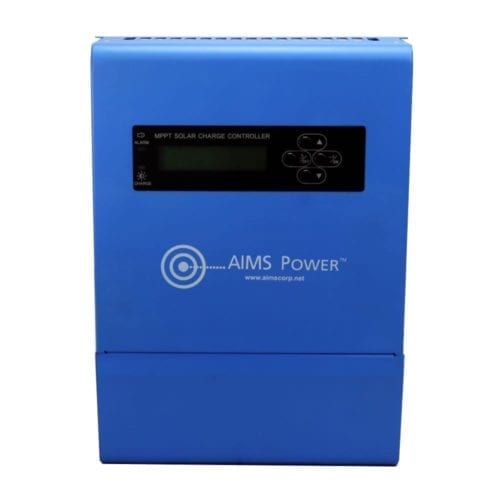
A solar charge controller sits between your solar panel and your battery to regulate solar charging and protect battery voltage from overcharging. These AIMS Power solar controllers run from 11 to 100 amps in MPPT and PWM, for 12V, 24V, 36V, and 48V battery banks, and work with lithium, AGM batteries, and lead-acid batteries in one solar system.


Two decades of off-grid and solar energy experience stand behind every charge controller here, sized for anything from a single solar panel up to a full off-grid solar system.

Experts match the right solar charge controller, amps, and battery voltage to your system. Call a live tech at 888-417-8673 or use technical support before or after you buy.

Add a charge controller to a larger order and spread the cost at checkout with financing, so you can build your off-grid solar system now and pay over time.

Most controller orders ship free from our U.S. warehouse to the 48 states (some exclusions apply), so your order arrives without added freight.

“I am totally off the grid… I bought an Aims 100 amp Power Controller and an Aims Combiner Box. Customer service is great and the equipment is excellent.”

“The quality of the cables were very good… The seal around the cables have no holes or pockets, so I feel very confident with this being water proof.”

“Very helpful sales associates. Knew the answer to every question we had regarding solar panels… We would recommend them to anyone buying a solar system.”
You need a solar charge controller if you have an off-grid solar system with solar panels charging a battery. A solar charge controller regulates the voltage and current from the solar panel to the battery, which prevents overcharging and protects battery life across more charge cycles. You generally do not need one only if your battery draws from the grid automatically. Our off-grid solar kits come with the right charge controller included.
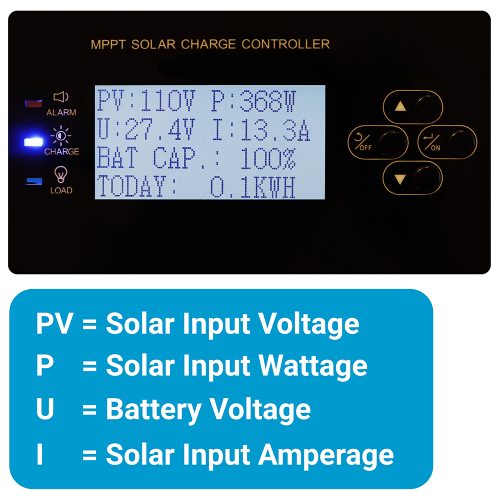
The difference between MPPT and PWM is how each one moves power to the battery. A PWM, or pulse width modulation, controller costs less upfront and works best when panel and battery voltage are close. An MPPT, or maximum power point tracking, controller uses a DC-DC converter to turn extra panel voltage into more charging current, so it is more efficient for larger arrays and in cold or low-light conditions.
The size solar charge controller you need depends on your solar panel watts and your battery voltage. Divide your total solar panel watts by your battery voltage to estimate the charging amps, then pick a controller rated above that number. Our controllers range from 11 to 100 amps for any size solar array. Our power calculator will help size your system with you.
Yes, one controller can handle multiple solar panels, as long as the combined output of the PV array stays within the charge controller’s amp and voltage limits. For a bigger solar array, step up to a higher-amp MPPT solar charge controller so the panels charge the battery at full efficiency.
Yes, one controller can handle multiple solar panels, as long as the combined output of the PV array stays within the charge controller’s amp and voltage limits. For a bigger solar array, step up to a higher-amp MPPT solar charge controller so the panels charge the battery at full efficiency.